
Why Do Machinists Prefer Coated Inserts for High-Speed Machining?
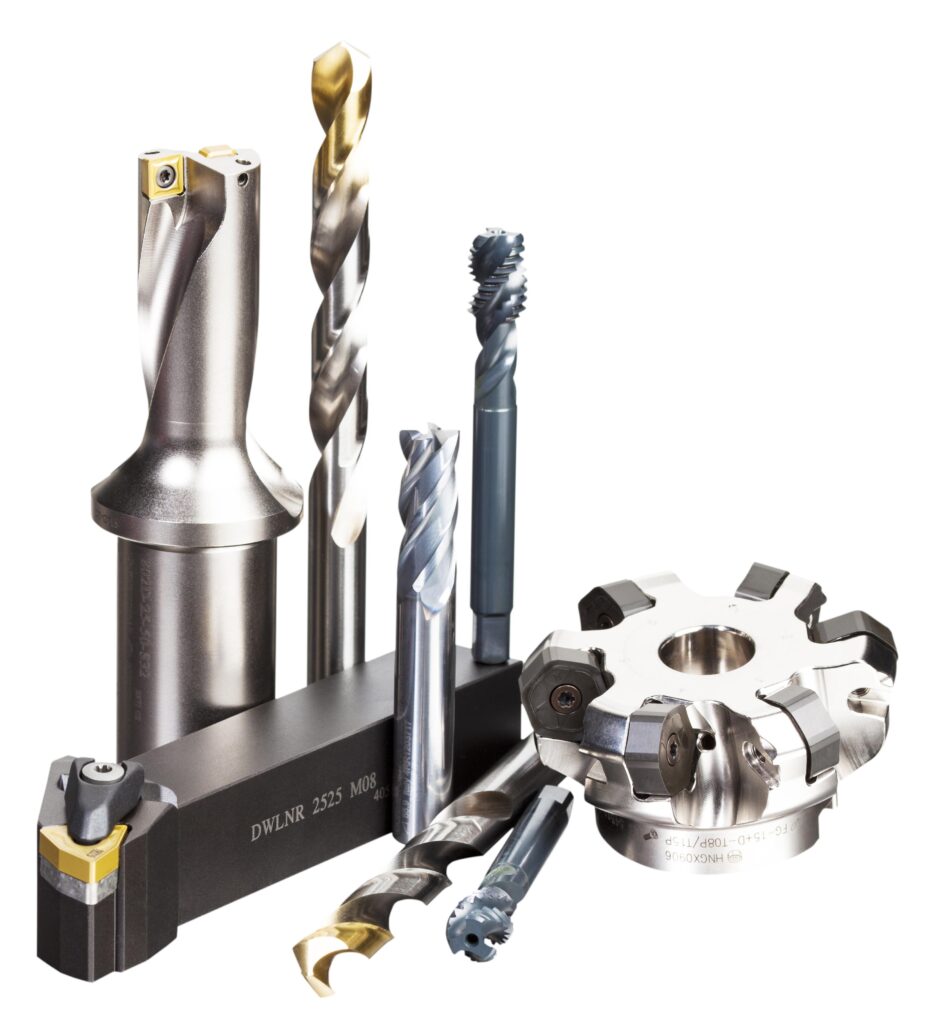
Push cutting speed up and an uncoated carbide edge runs into a problem that has nothing to do with the carbide itself: the temperature at the cutting edge climbs fast enough to start a chemical reaction with the workpiece material, and that reaction eats the edge away. Coatings exist specifically to interrupt that process.
This guide explains what a coating actually does at the cutting edge, why that matters more as speed goes up, and which coating type tends to win out in which situation.
Running high-speed operations and not sure which coated grade to use? Tell our team the material and operation and we’ll help you choose.
What “Coated” Actually Means
A coated insert is a cemented carbide (or cermet) insert with one or more thin, extremely hard layers deposited on top of the substrate. The carbide underneath still provides the toughness and structural strength; the coating’s job is to protect the surface that actually touches the workpiece and the chip. The majority of carbide cutting tools in use today employ CVD or PVD hard coatings, and their high hardness, wear resistance, and chemical stability offer proven benefits in tool life and machining performance.
There are two main coating processes, and they produce meaningfully different coatings:
- CVD (Chemical Vapor Deposition) — generated by chemical reactions at temperatures of 700-1,050°C. CVD coatings have high wear resistance and excellent adhesion to cemented carbide.
- PVD (Physical Vapor Deposition) — a lower-temperature process that adds wear resistance through coating hardness rather than the thick, chemically bonded layers CVD produces.
Why High-Speed Machining Changes the Equation
During high-speed machining, oxidation wear occurs locally at the cutting edge, which causes notch wear — so the chemical inertness of the cutting tool material becomes more important specifically under high-speed, dry machining conditions. An uncoated carbide surface is far more chemically reactive with the workpiece at these temperatures than a coated one, which is exactly where crater wear (a chemical reaction between workpiece and tool, amplified by cutting speed) comes from.
This is the core reason machinists reach for coated inserts as speed goes up: the coating is specifically engineered to resist the chemical and thermal attack that an uncoated edge can’t withstand at higher temperatures, buying back tool life that would otherwise be lost to crater and notch wear.
CVD Coatings: Built for Sustained High-Speed Wear Resistance
Modern CVD coatings combine several layers, each doing a different job:
- MT-Ti(C,N) — its hardness provides abrasive wear resistance, resulting in reduced flank wear.
- CVD-Al2O3 — chemically inert with low thermal conductivity, making it resistant to crater wear.
- CVD-TiN — improves wear resistance and is used for wear detection (its colour change shows when the coating has worn through).
CVD coated grades are the first choice in a wide range of applications where wear resistance is important, including general turning and boring of steel (where thick CVD coatings offer crater wear resistance), general turning of stainless steels, and milling grades across ISO P, ISO M, and ISO K material groups. For milling cast iron and steel specifically, CVD coated cemented carbide grades are generally preferred over PVD coated grades, especially at high cutting speeds.
The trade-off: while CVD coated cutting tools offer good wear resistance at high cutting speeds, their resistance to the thermo-mechanical shocks of intermittent cutting is more limited — a typical failure mode in milling is thermal cracks (sometimes called comb cracks) appearing on the primary cutting edge.

PVD Coatings: Hardness, Oxidation Resistance, and Sharper Edges
- PVD-Ti(C,N) — titanium carbonitride, harder than TiN, adds flank wear resistance.
- PVD-(Ti,Al)N (TiAlN) — titanium aluminium nitride, with high hardness combined with oxidation resistance, improving overall wear resistance.
- PVD-oxide — used for chemical inertness and enhanced crater wear resistance.
TiAlN in particular is worth singling out for high-speed work. At temperatures above roughly 750°C, TiAlN becomes harder than TiN or TiCN, and its oxidation resistance comes from forming a protective outermost layer of aluminium oxide (Al2O3) during the cutting operation itself, with an intermediate layer of titanium, aluminium, oxygen, and nitrogen underneath — this self-forming protective layer is exactly what gives TiAlN its high-temperature stability and its documented advantage in resisting crater wear compared to TiN- or TiCN-coated tools.
That strength comes with a trade-off: TiAlN coating is more brittle and has a higher friction coefficient than TiN coating, which causes it to perform worse than TiN in low-speed and interrupted machining. In short, TiAlN is built for high-speed work specifically — it’s not automatically the best choice once cutting speed and interruption patterns change.
Not sure whether CVD or PVD suits your job? Send us the material and whether the cut is continuous or interrupted and we’ll recommend the right grade.
CVD vs PVD: At a Glance
| Factor | CVD | PVD |
|---|---|---|
| Deposition temperature | 700-1,050°C | Lower temperature process |
| Coating thickness | Typically thicker | Typically thinner, keeping a sharper cutting edge |
| Primary strength | High wear resistance and excellent adhesion to cemented carbide; strong at sustained high cutting speeds | Adds wear resistance through coating hardness; TiAlN specifically adds oxidation resistance at high temperature |
| Weakness | More limited resistance to thermo-mechanical shock in interrupted cuts (risk of thermal/comb cracks) | TiAlN is more brittle with a higher friction coefficient, performing worse than TiN at low speed or in interrupted cuts |
| Typically preferred for | General turning/boring of steel and stainless steel; milling cast iron and steel at high cutting speeds (ISO P, M, K) | Interrupted cuts, sharper-edge requirements, and applications needing a thinner, harder coating |
So Why Do Machinists Actually Prefer Them?
It comes down to what a coating buys back at the edge as speed increases: reduced flank wear (from the coating’s hardness), reduced crater wear (from chemical inertness and oxidation resistance), and — with TiAlN specifically — a self-forming protective oxide layer that gets more effective as temperature rises rather than less. Reviewed research on Ti-based hard coatings confirms this pattern directly: TiAlN coating is indeed shown to perform better than TiN and TiCN coatings in high-speed machining, precisely because of this oxidation-resistance mechanism.
In practical terms, that translates to a cutting edge that holds up longer at the speeds where an uncoated or under-coated tool would already be deep into crater wear — meaning fewer tool changes, more predictable tool life, and the ability to actually run the higher speeds a modern CNC machine and carbide substrate are capable of, rather than backing off to protect an edge that can’t handle the heat.
Common Mistakes When Selecting a Coated Insert
Assuming Any Coating Fixes a Wrong Grade Choice
A coating protects the surface; it doesn’t change the substrate’s fundamental toughness or hardness. Selecting the wrong carbide grade for the material and expecting the coating alone to compensate is a common and costly assumption.
Using a CVD-Coated Insert on Heavily Interrupted Cuts
Since CVD’s resistance to thermo-mechanical shock is more limited, using it on a heavily interrupted cut invites thermal (comb) cracking at the primary cutting edge — a PVD-coated grade is often the better fit there.
Running TiAlN at Low Speed Expecting High-Speed Performance
TiAlN’s advantage is specifically a high-temperature, high-speed phenomenon tied to its self-forming Al2O3 layer. At low speed or in interrupted cuts, it performs worse than a straightforward TiN coating, which is more resistant to those conditions.
Ignoring Which ISO Material Group the Coating Is Built For
CVD coated grades are matched to specific ISO material groups (P, M, K) and specific operations (turning, boring, milling). Applying a grade outside its intended range undercuts the benefit the coating was engineered to deliver.
Sourcing Coated Inserts in Dubai
Khokhawala Trading LLC supplies premium carbide tooling systems for CNC machining, metal cutting, milling, turning, and drilling in Dubai and across the UAE.
KTRDG’s carbide tooling range includes products from Sandvik Coromant, Kennametal, Korloy, and Mitsubishi — leading manufacturers of CVD and PVD coated carbide inserts.



With more than 35 years of industrial tool supply experience, Khokhawala Trading LLC serves manufacturers, CNC shops, fabrication companies, and engineering industries in the UAE.
Ready to shop coated inserts? Browse our carbide tooling systems range or reach out with your requirement for a fast quote.
A Quick Coated Insert Selection Checklist
- What’s the workpiece material, and which ISO material group (P, M, K) does the grade target?
- Is the cut continuous (favours CVD at high speed) or interrupted (favours PVD or TiN)?
- Is the operation sustained high-speed cutting where oxidation resistance matters most?
- Have you checked the specific coating layers (Al2O3, TiAlN, Ti(C,N)) against what the application actually needs, rather than assuming “coated” is enough detail?
- Is the carbide substrate itself, not just the coating, matched to the required toughness?
- Are you seeing thermal/comb cracking that suggests a CVD grade is mismatched to an interrupted cut?
Conclusion
Coated inserts exist because an uncoated carbide edge can’t chemically and thermally withstand sustained high-speed cutting as well as a coated one can. CVD coatings bring thick, highly wear-resistant, chemically inert layers suited to sustained high-speed turning, boring, and milling; PVD coatings — TiAlN especially — bring a thinner, harder, self-protecting layer that performs best in that same high-temperature territory but loses its advantage at lower speeds or in interrupted cuts. Matching the coating type to the actual cutting conditions, not just reaching for “a coated insert,” is what turns the coating’s theoretical benefit into real tool life.
For businesses sourcing coated inserts in Dubai, Khokhawala Trading LLC supplies Sandvik Coromant, Kennametal, Korloy, and Mitsubishi carbide tooling for CNC machining, milling, turning, and drilling applications.
Need the Right Coated Insert for a High-Speed Job?
Send us your material and operation, and Khokhawala Trading LLC will help you find the right grade.
Coated Inserts for High-Speed Machining, Answered
The coating adds hardness, wear resistance, and chemical stability to the cutting edge, while the carbide substrate underneath still provides the tool’s toughness and structural strength. The majority of carbide cutting tools in use today employ CVD or PVD hard coatings for exactly this reason.
During high-speed machining, oxidation wear occurs locally at the cutting edge, causing notch wear, so the chemical inertness of the cutting tool material becomes more important specifically under high-speed, dry machining conditions. Coatings are engineered to resist that chemical and thermal attack.
CVD (Chemical Vapor Deposition) coatings are generated by chemical reactions at 700-1,050°C and produce thick, highly wear-resistant layers with excellent adhesion to carbide. PVD (Physical Vapor Deposition) coatings are deposited at lower temperatures, are typically thinner, and add wear resistance mainly through coating hardness.
Above roughly 750°C, TiAlN becomes harder than TiN or TiCN, and it forms a protective outermost layer of aluminium oxide during the cutting operation itself, giving it high-temperature stability and strong oxidation resistance that improves crater wear performance specifically at high speed.
Not as well. TiAlN coating is more brittle and has a higher friction coefficient than TiN coating, causing it to perform worse than TiN in low-speed and interrupted machining, even though it outperforms TiN and TiCN at high speed.
For milling cast iron and steel, CVD coated cemented carbide grades are generally preferred over PVD coated grades, especially for applications using high cutting speeds.
CVD-Al2O3 is chemically inert with low thermal conductivity, which makes it resistant to crater wear — a key reason thick CVD coatings offer strong crater wear resistance in general turning and boring of steel.
While CVD coated cutting tools offer good wear resistance at high cutting speeds, their resistance to the thermo-mechanical shocks of intermittent cutting is more limited, and a typical wear mechanism in milling is thermal cracks (comb cracks) appearing on the primary cutting edge.
No. The coating protects the surface of the insert, but the carbide substrate underneath still determines the tool’s fundamental toughness and hardness. Selecting the wrong grade for the material and relying on the coating to compensate is a common mistake.
Khokhawala Trading LLC supplies carbide tooling systems in Dubai and across the UAE, including Sandvik Coromant, Kennametal, Korloy, and Mitsubishi coated inserts.