
How to Choose the Right Cutting Fluid for CNC Machining: Soluble Oil vs Synthetic vs Neat Oil
The wrong cutting fluid shows up as short tool life, rust on the machine, a smell that wasn’t there on Friday, or a part that comes off the machine warm and out of tolerance. The right one is rarely the most expensive; it is the one that suits your material, your machine, and how much fluid management your shop can actually keep up with.
This guide compares the three main families, soluble oil, synthetic, and neat oil, explains what each does well and where it causes trouble, and gives you a way to choose between them.
The short answer: water-based fluids (soluble oil and synthetic) cool better, and a typical CNC machine tool uses an emulsified coolant. Neat oil lubricates but is oil all the way through. Choose by whether your cut is limited more by heat or by friction, then by what your shop can maintain.
What a Cutting Fluid Has to Do
Cutting fluid is a coolant and lubricant made for metalworking. A good one keeps the workpiece at a stable temperature, which matters when you’re holding close tolerances. It lubricates the edge to extend tool life and reduce chips welding onto the tool (built-up edge), keeps people safe to handle it, and prevents rust on machine parts and cutters.
Cooling and lubrication are different jobs. Metal cutting generates heat from friction and from the energy lost deforming the material, and air removes it poorly. Liquid coolant removes significantly more heat more rapidly. Lubrication, meanwhile, reduces the friction at the tool-chip interface, so some of that heat is never generated.
Not every material needs fluid. Cast iron and most types of brass are common exceptions that may be machined dry.
Soluble Oil vs Synthetic vs Neat Oil
Wikipedia groups cutting liquids into three types: mineral, semi-synthetic, and synthetic. Neat (or straight) oil is the mineral-oil category used without water. Soluble oil is the semi-synthetic category.
| Factor | Neat (Mineral) Oil | Soluble Oil (Semi-Synthetic) | Synthetic |
|---|---|---|---|
| What it is | Petroleum-based oil, from thick, dark, sulfur-rich cutting oils to light, clear oils | An emulsion or microemulsion of mineral oil in water. A typical CNC machine uses a small amount of oil emulsified into a larger amount of water with a detergent | Usually water-based, with no mineral oil |
| Introduced | Late 19th century | 1930s | Late 1950s |
| Main strength | Lubrication, since it is oil throughout | Combines water’s cooling with oil’s lubrication | Water-based cooling, with rust inhibition and resistance to thermal breakdown |
| Watch-outs | Not diluted, so it does not get water’s heat-carrying advantage | Petroleum-based fluids in the sump are prone to bacterial growth and tramp oil contamination | Water on its own boils easily, rusts machine parts, and lubricates poorly, so additives do the work |
| Typical fit | Where lubrication matters most | General CNC work with flood coolant | Where cooling and cleanliness matter and the fluid is managed |
Semi-synthetic and synthetic fluids are attempts to combine the best of oil and water. Properties sought include rust inhibition, tolerance of a wide range of water hardness (holding a pH of roughly 9 to 10), compatibility with many metals, resistance to thermal breakdown, and environmental safety.
The “typical fit” row is a general guide, not a rule. Confirm any specific fluid against your machine builder’s and the fluid maker’s recommendations.

Need tooling suited to flood or through-tool coolant? Tell us the material and operation and we’ll match carbide tooling to your setup.
How to Choose
1. Is the Cut Limited by Heat or by Friction?
Fast, high-volume cutting generates heat that the chip and the fluid have to carry away, which favours a water-based fluid. Slow or heavy cuts where friction at the edge is the problem favour a fluid with more lubricating power. Many operations need both, which is why emulsions exist.
2. What Material Are You Cutting?
Material changes the answer, and as noted above, cast iron and most brass can run dry. The table below shows Wikipedia’s lubricant guidance for tapping, which is a demanding, friction-heavy operation, as an example of how materials differ.
| Material | Tapping Lubricant Suggested |
|---|---|
| Carbon (mild) steel | Petroleum-based or synthetic cutting oil |
| Alloy steel | Petroleum-based cutting oil with about 10% kerosene or mineral spirits |
| Stainless steel | The same mixture as alloy steel |
| Cast iron | None; use a low-velocity air blast to clear chips |
| Aluminium | Kerosene or mineral spirits with 15 to 25% petroleum-based cutting oil |
| Brass | Kerosene or mineral spirits |
| Bronze | Kerosene or mineral spirits with 10 to 15% petroleum-based cutting oil |
3. How Will the Fluid Reach the Cut?
Delivery matters as much as the fluid. Flood cooling, usually an oil-water mixture, covers the cutting zone and combines water’s cooling with oil’s lubrication, but the flow rate must be regulated properly. Through-tool (through-spindle) systems send coolant through the spindle and tool to the cutting interface, often at 1 to 30 MPa, and need tools with coolant holes and rotary unions rated for the pressure.
Minimum quantity lubrication (MQL) uses a small amount of fluid delivered precisely. It doesn’t provide much cooling in the heat-transfer sense, but its lubrication prevents some heat from being generated, and the chips come out looking dry.
4. What Can Your Shop Maintain?
Water-mixed fluids need checking and care. Neat oil removes the mix-ratio and bacterial-growth questions, at the cost of the water’s cooling. Be honest about how consistently your shop can test and tend the sump.
5. What Do the Machine Builder and Tool Maker Say?
Check compatibility with the machine and its seals, and follow the tool manufacturer’s coolant guidance for the grade and coating you’re using.
Keeping Water-Mixed Fluid in Good Condition
- Check the concentration. A hand-held refractometer, reading on the Brix scale, is the industrial standard for the mix ratio of water-soluble coolants. Contamination of the sample reduces its accuracy. Laboratory titration is the official method but needs trained personnel.
- Remove tramp oil. Slideway lubricant, hydraulic leaks, and the protective film on bar stock find their way into the coolant. Skimmers separate it, and removing it prevents micro-organism growth.
- Watch for bacteria. Growth is predominant in petroleum-based cutting fluids. The “Monday-morning smell” after a weekend of no use is an early sign the fluid needs replacing. Keeping fluid temperature as low as practical slows growth.
- Test routinely. Some regulators, such as the HSE in the UK, require weekly testing of metalworking fluids: bacterial count with dipslides and pH with a meter or strips, since a low pH can signal high bacterial levels.
- Dispose properly. Used fluid that is fetid or chemically degraded must be disposed of in line with the applicable regulations.
Health and Safety
Cutting fluids can cause illness or injury, mainly through skin contact with compromised fluid or by inhaling aerosols. Hazards come from the fluid itself, the metal particles in it, bacterial or fungal growth, the biocides added to inhibit that growth, corrosion inhibitors, and tramp oils. Reported effects include irritation of the skin, eyes, nose, throat, and lungs, dermatitis, and asthma.
NIOSH has recommended limiting metalworking fluid aerosols to 0.4 mg/m³ of air as a time-weighted average over a 10-hour day in a 40-hour week. Room ventilation, splash guards on machines, and PPE such as safety glasses, respirators, and gloves reduce the risk. Mist from imprecise delivery has been a particular problem for workers’ breathing.
Common Mistakes
Choosing by Price per Litre
A cheaper fluid that needs frequent replacement, shortens tool life, or causes rust costs more over time. Compare total cost, not the drum price.
Mixing by Eye
Wrong concentration reduces performance and invites problems. Measure it with a refractometer.
Ignoring Tramp Oil
Slideway oil in the sump feeds bacteria and degrades the fluid. Fit a skimmer and use it.
Running Fluid on Materials That Prefer Dry
Cast iron and most brass can be machined dry, so sump costs there may be avoidable.
Expecting MQL to Cool
MQL lubricates precisely but offers little heat-transfer cooling. It suits cuts where lubrication is the main need.
Using Motor Oil as a Shortcut
Modern multi-weight motor oils with detergents and other additives are best avoided as cutting fluids, since the additives can present a copper-corrosion concern to brass and bronze in machine bearings and leadscrew nuts.
Sourcing Tooling for Your Coolant Setup in Dubai
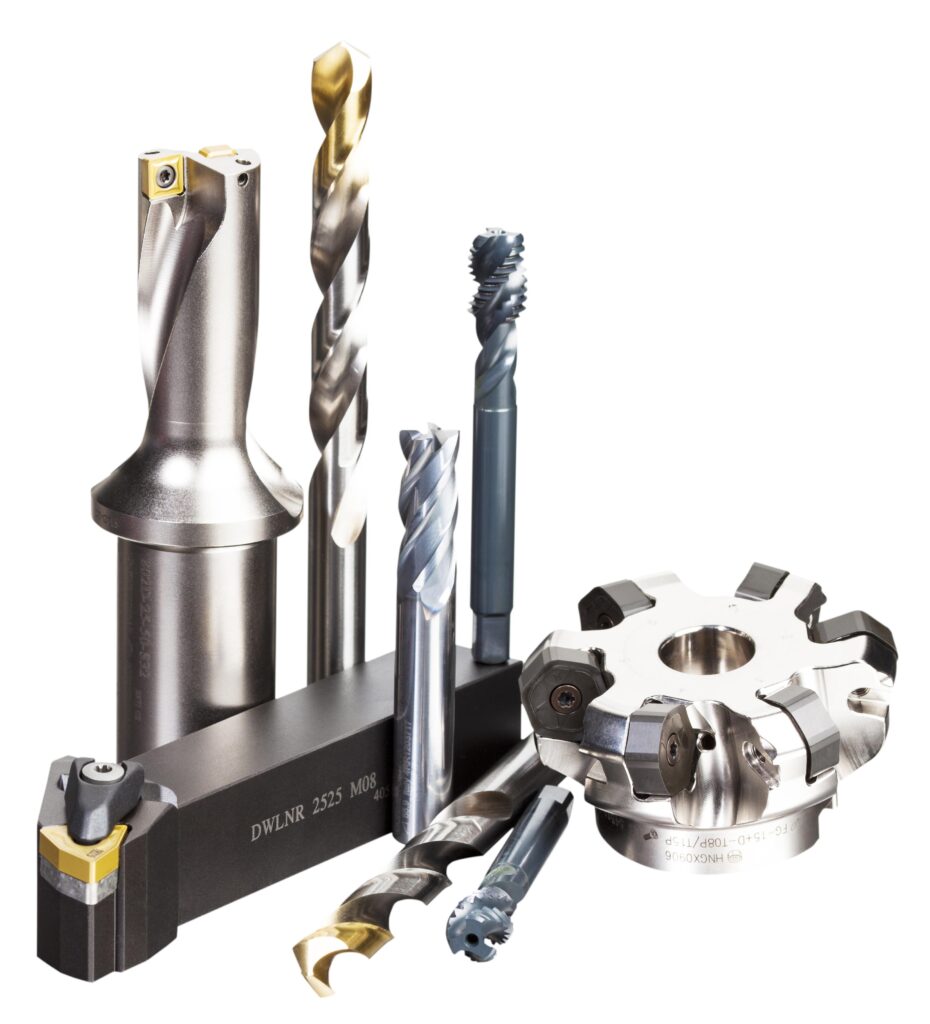
Cutting fluids themselves come from fluid suppliers. Khokhawala Trading LLC supplies the other half of the equation: premium carbide tooling systems for CNC machining, milling, turning, and drilling in Dubai and across the UAE, including tooling suited to flood and through-tool coolant.
KTRDG’s carbide tooling range includes products from Sandvik Coromant, Kennametal, Korloy, and Mitsubishi, each of which publishes coolant and cutting-data guidance for its grades.

With more than 35 years of industrial tool supply experience, Khokhawala Trading LLC serves manufacturers, CNC shops, fabrication companies, and engineering industries in the UAE.
Ready to shop carbide tooling? Browse the carbide tooling systems range or send us your requirement for a fast quote.
A Quick Cutting Fluid Checklist
- Is the material one that can run dry (cast iron, most brass), or does it need fluid?
- Is the cut limited by heat (favours water-based) or by friction (favours more lubricity)?
- How will the fluid be delivered: flood, through-tool, or MQL?
- Do the machine builder and the tool maker approve the fluid?
- Do you have a refractometer for concentration, a skimmer for tramp oil, and a routine for bacteria and pH?
- Is your mixing water suitable for the fluid you’ve chosen?
- Are ventilation, splash guards, and PPE in place?
Conclusion
Soluble oil, synthetic, and neat oil each trade cooling, lubrication, and upkeep differently. Water-based fluids carry heat away, and a typical CNC machine tool uses an emulsified coolant. Neat oil lubricates without any water. The right choice follows your material, whether heat or friction limits the cut, how the fluid is delivered, and how well your shop can maintain it. Whatever you choose, check concentration, remove tramp oil, and protect the people working around it.
For businesses sourcing carbide tooling in Dubai, Khokhawala Trading LLC supplies Sandvik Coromant, Kennametal, Korloy, and Mitsubishi tooling for CNC machining, milling, turning, and drilling.
Need Tooling That Suits Your Coolant Setup?
Send us your material, operation, and coolant delivery method, and Khokhawala Trading LLC will help you find the right tooling.
Cutting Fluid, Answered
There are generally three types of liquids: mineral (neat or straight oils), semi-synthetic (soluble oil), and synthetic. Cutting fluids also come as pastes, gels, aerosols (mists), and gases such as air.
Soluble oil, also called a semi-synthetic coolant, is an emulsion or microemulsion of mineral oil in water. These began to see use in the 1930s. A typical CNC machine tool uses an emulsified coolant: a small amount of oil emulsified into a larger amount of water with a detergent.
Synthetic coolants originated in the late 1950s and are usually water-based. Together with semi-synthetics, they aim to combine the best properties of oil and water, including rust inhibition, resistance to thermal breakdown, and compatibility with many metals.
Water is a good conductor of heat, but it boils easily, promotes rusting of machine parts, and doesn’t lubricate well. Other ingredients are needed to create an optimal cutting fluid.
Cast iron and most types of brass are common exceptions that may be machined dry. Most other machining processes can benefit from cutting fluid, depending on the workpiece material.
A hand-held refractometer reading in the Brix scale is the industrial standard for the mix ratio of water-soluble coolants, though sample contamination reduces its accuracy. Titration is the official method but needs trained personnel in a laboratory.
Tramp oil is unwanted oil that has mixed with cutting fluid, from slideway lubricant, bar stock coatings, or hydraulic leaks. It degrades the fluid and feeds micro-organism growth. Skimmers separate it from the coolant.
Bacterial growth, which is predominant in petroleum-based cutting fluids. The “Monday-morning smell” after Friday-to-Monday disuse is an early sign the fluid needs replacing, and keeping fluid temperature low slows growth.
Not for every cut. MQL doesn’t provide much cooling in the heat-transfer sense, but its targeted lubrication prevents some heat from being generated, and it leaves chips that look dry. It suits cuts where lubrication is the main need.
Khokhawala Trading LLC supplies carbide tooling systems in Dubai and across the UAE, including Sandvik Coromant, Kennametal, Korloy, and Mitsubishi products. For cutting fluids, speak to a fluid supplier and your machine builder.