
Metric vs Imperial Tools: What UAE Workshops Need to Know When Sourcing Internationally
The UAE measures in metric, but the machine in your workshop may not. A press from one country, a pump from another, and spare parts from a third can each arrive built to a different system, and a tap, wrench, or fastener that is “almost” the right size is the wrong one.
This guide covers what the UAE’s metric requirement actually covers, where metric and inch tools genuinely differ, and what to confirm before you order from abroad.
The short answer: the UAE’s legal system of measurement is metric (SI), but that governs trade measurements, not what standard a tool, thread, or spare part is made to. Inch-based tools and threads are still common in imported equipment, and they don’t interchange with metric ones. Confirm the unit and the thread standard before you order, not after the shipment arrives.
What the UAE’s Metric Requirement Actually Covers
The UAE Cabinet Decision No. 31 of 2006 on the national system of measurement made the International System of Units (SI) the basis of the country’s legal units of measurement. When the Emirates Authority for Standardization and Metrology (ESMA), then the national metrology authority, rolled it out, the visible changes were in trade: litres instead of gallons for fuel, metres instead of feet and yards in official transactions and land measurement, and metres instead of yards in the textile trade.
That is a rule about how quantities are legally stated and sold. It does not say that every tool, bolt, or machine part in a UAE workshop must be metric, and it doesn’t change what an imported machine was built to. Spare parts for that machine follow the machine, not the legal unit.
Rules and responsible bodies change, so for anything with a legal or contractual consequence, check the current requirement with the relevant UAE authority.
The Two Systems in Practice
Metric tools and fasteners are sized in millimetres. Inch tools are sized in fractions of an inch, and the inch is defined as exactly 25.4 mm. The two aren’t variations of one scale: standard sizes are chosen independently, so most don’t line up.
Inch-based screw threads are standardised in the Unified Thread Standard (UTS), which defines threads commonly used in the United States and Canada. Metric threads follow the ISO metric screw thread standard, with tolerances covered by ISO 965. Wherever your supplier or machine is from tells you which system to expect.
Threads: Same Angle, Different Sizes
This is the trap. UTS threads have the same 60° profile as the ISO metric thread, so a metric and an inch thread can look nearly identical. The difference is that the diameter and pitch of each UTS thread were chosen as inch fractions rather than millimetre values. Matching angle doesn’t make them compatible.
Metric threads are designated by diameter and pitch in millimetres, such as M10 × 1.5. Inch threads use diameter and threads per inch (TPI), the reciprocal of the pitch. Wikipedia’s example is #6-32 UNC 2B: a major diameter of 0.1380 inch at 32 TPI, in the coarse series (UNC), with tolerance class 2B. UNC, UNF, and UNEF mean the coarse, fine, and extra-fine series.
| Aspect | Metric (ISO) | Inch (Unified, UTS) |
|---|---|---|
| Thread profile | 60° | 60° (same profile) |
| Diameter | Millimetres | Inch fractions or numbered sizes |
| Pitch | Distance between threads in mm | Threads per inch (TPI) |
| Example designation | M10 × 1.5 | #6-32 UNC 2B |
| Series | Coarse and fine pitch | UNC, UNF, UNEF |
| Tolerance standard | ISO 965 | Unified tolerance classes (such as 2B) |
| Interchangeable with the other? | No. Matching angle does not make the diameters and pitches compatible. | |
Taps and Tap Drill Sizes
A tap cuts one specific thread, so it is either a metric tap or an inch tap, and the hole under it has to match. For metric taps, tap drill size equals the major diameter minus the pitch, so an M10 × 1.5 tap takes an 8.5 mm drill, giving roughly a 75% thread. Unified threads have their own preferred tap drill sizes. Drilling for the wrong system, or using a metric tap in an inch-threaded hole, damages the thread or the tap.
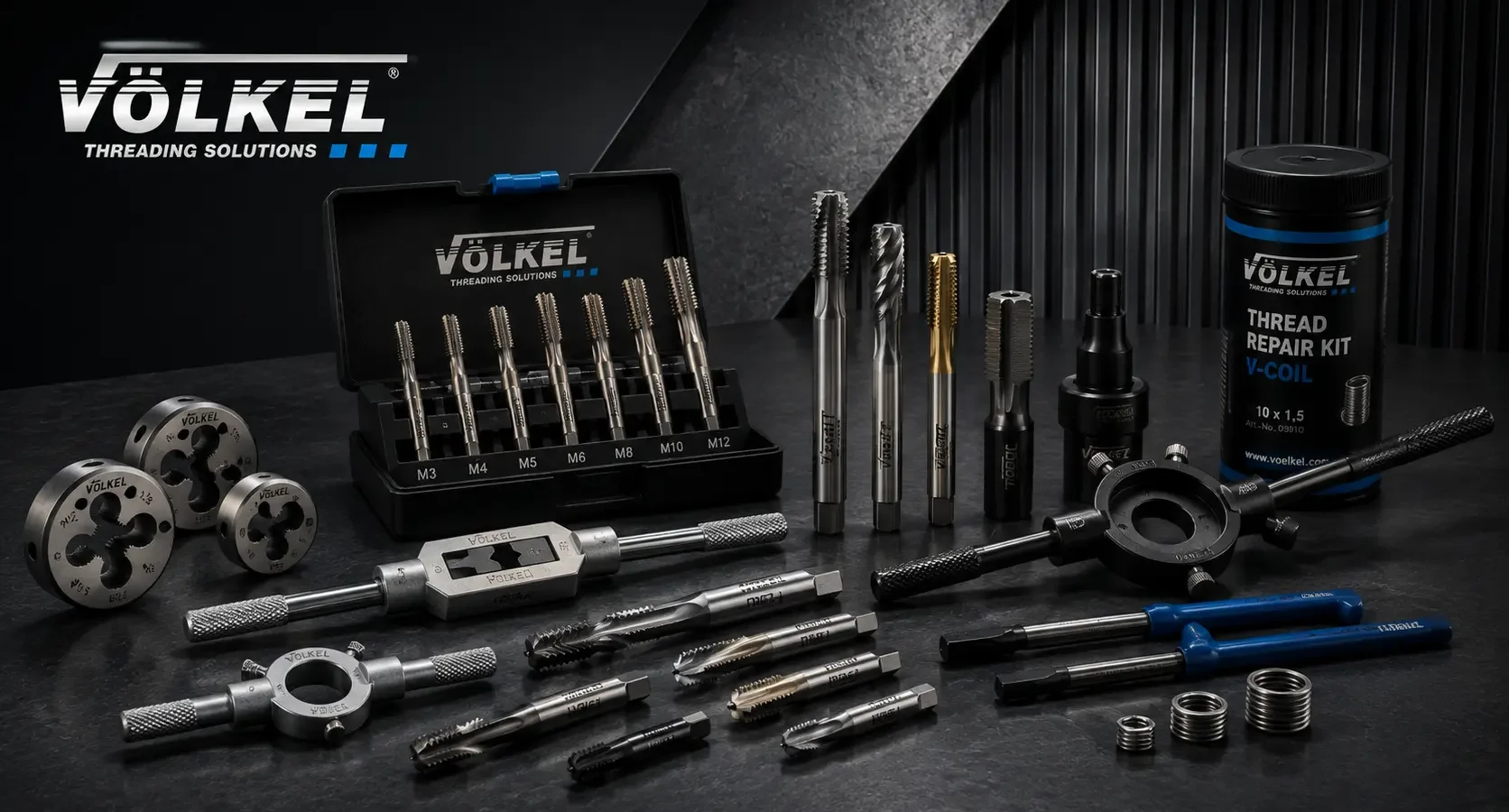
Need taps, dies, or thread repair for imported equipment? Tell us the thread designation and we’ll help you find the matching VÖLKEL tool.
Wrenches and Sockets: Close Is Not Fit
A wrench or socket is sized to the width across the flats of the nut or bolt head. Metric sizes are in millimetres; inch sizes are in fractions. The two systems are in general not compatible, which can round off nuts and bolts. Wikipedia’s example is using a 13 mm spanner in place of a 1/2 inch (12.70 mm) one.
A few sizes are close enough to interchange for most purposes:
| Metric | Nearest Inch Size | Close Enough? |
|---|---|---|
| 19 mm | 3/4 inch (19.05 mm) | Yes, for most purposes |
| 8 mm | 5/16 inch (7.94 mm) | Yes, for most purposes |
| 4 mm | 5/32 inch (3.97 mm) | Yes, for most purposes |
| 13 mm | 1/2 inch (12.70 mm) | No, risks rounding the fastener |
If a fastener’s origin is unclear, measure the head across the flats with a caliper. A reading near a whole millimetre points to metric; near an inch fraction points to inch.
Measuring Tools: Be Able to Read Both
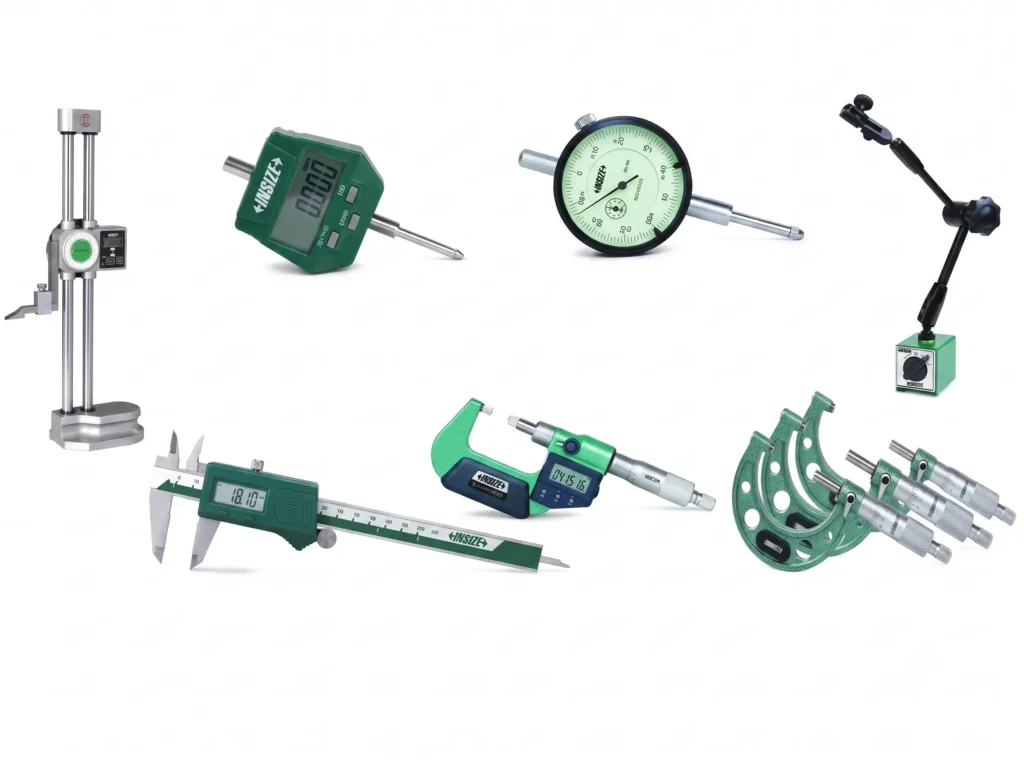
If you receive drawings or parts in both systems, your measuring tools need to cope. Many digital calipers switch between inch and mm at the press of a button. A vernier caliper cannot convert between the two, because its scale is physically engraved in one unit, so the unit you buy is the unit you read.
Check the scale or display unit when ordering instruments such as calipers, micrometers, and dial gauges, and make sure operators know which unit a drawing uses before they measure. Torque wrenches are another place units matter: torque is commonly shown in N·m or in lb-ft, and the digital types let the user pick the unit.
What to Confirm Before You Order From Abroad
- Thread standard, not just size. Metric (M) or inch (UNC, UNF, UNEF), and the pitch or TPI.
- Tolerance class. ISO 965 grade for metric, or the unified class for inch.
- Units on the datasheet. Dimensions, drive sizes, ranges, and ratings can be stated in either system.
- Where the machine was built. Spare parts follow the original machine’s standard.
- Instrument unit and resolution. Dual-unit digital, or single-unit mechanical.
- Mixed systems on one machine. Check each fastener rather than assuming one standard throughout.
Common Mistakes
Assuming “Metric Country” Means Metric Equipment
The UAE’s legal units are metric, but imported machinery and spares keep the standard they were built to.
Trusting a Matching Thread Angle
Both systems use a 60° profile. Different diameters and pitches mean they don’t mate.
Swapping Near-Size Wrenches
Using a 13 mm on a 1/2 inch head, or the reverse, rounds fasteners. Only a few pairs are close enough.
Ordering by Diameter Alone
A diameter without a pitch or TPI and a standard doesn’t identify a thread.
Buying a Single-Unit Instrument for Mixed Work
A vernier caliper can’t convert units. If drawings come in both systems, a dual-unit digital caliper avoids manual conversion errors.
Sourcing Tools That Match Your Equipment in Dubai
Khokhawala Trading LLC supplies industrial tools in Dubai and across the UAE, including threading solutions from VÖLKEL, a German manufacturer with more than 100 years of experience in taps and an offering of more than 12,000 threading tools across nearly all international thread standards. KTRDG also supplies precision measuring instruments from Mitutoyo and Insize.


With more than 35 years of industrial tool supply experience, Khokhawala Trading LLC serves manufacturers, CNC shops, fabrication companies, and engineering industries across the UAE. If you’re replacing a part on imported equipment, send the thread designation or a photo and the team will help confirm the right tool.
Ready to shop? Browse threading solutions and precision measuring instruments, or send us your specification for a fast quote.
A Quick Metric vs Imperial Checklist
- Do you know whether the machine or part was built to metric or inch standards?
- Is the thread named in full: standard, diameter, and pitch or TPI?
- Is the tolerance class confirmed?
- Do the datasheet units match the ones your team reads?
- Do wrenches and sockets fit exactly, rather than “close”?
- Do your measuring instruments read the unit your drawings use?
- Have you measured a sample of the existing fasteners before ordering replacements?
Conclusion
The UAE measures in SI, but the tools and threads in a workshop follow the equipment and the countries it came from. Metric and inch systems share a 60° thread profile and still don’t interchange, and “close” wrench sizes round off fasteners. The safest habit when sourcing internationally is to specify the standard, the unit, and the full thread designation every time.
For businesses sourcing tools in Dubai, Khokhawala Trading LLC supplies VÖLKEL threading solutions and Mitutoyo and Insize measuring instruments, and can help confirm the right match.
Not Sure Whether It’s Metric or Inch?
Send us the part number, thread designation, or a photo, and Khokhawala Trading LLC will help you find the right tool.
Metric vs Imperial Tools, Answered
Yes. UAE Cabinet Decision No. 31 of 2006 made SI the basis of the country’s legal units of measurement, and metric units replaced gallons, feet, and yards in areas such as fuel sales, official length measurement, and the textile trade.
Not necessarily. The legal-units rule covers how quantities are stated and sold, not the standard an imported machine or part was built to. Equipment made to inch standards needs inch-compatible spares and tools.
No. Unified (inch) threads share the 60° profile of ISO metric threads, but their diameters and pitches were chosen as inch fractions rather than millimetre values, so they don’t mate with metric threads.
They are Unified thread series: UNC is coarse, UNF is fine, and UNEF is extra fine. A designation such as #6-32 UNC 2B gives the size, the threads per inch, the series, and the tolerance class.
By the letter M, the nominal diameter, and the pitch in millimetres, for example M10 × 1.5. Metric thread tolerances are covered by ISO 965.
It’s not recommended. The two systems are generally not compatible, and using a 13 mm spanner in place of a 1/2 inch (12.70 mm) one can round off the nut or bolt head.
A few pairs are close enough for most purposes: 19 mm and 3/4 inch (19.05 mm), 8 mm and 5/16 inch (7.94 mm), and 4 mm and 5/32 inch (3.97 mm). Most other sizes are not.
Measure the head across the flats with a caliper. A reading close to a whole millimetre suggests metric; a reading close to an inch fraction suggests inch. The thread itself also needs checking by diameter and pitch or TPI.
Many digital calipers switch between inch and mm at the press of a button. A vernier caliper cannot convert between the two, since its scale is physically engraved in one unit.
Khokhawala Trading LLC supplies threading solutions, including VÖLKEL taps and dies, and precision measuring instruments from Mitutoyo and Insize, in Dubai and across the UAE.